NASA

Comet C/2023 A3: A Celestial Wonder

Comet C/2023 A3, officially named Comet Tsuchinshan–ATLAS, is a recently discovered celestial object that has sparked interest among astronomers and space enthusiasts alike. Identified in early 2023, this comet bears a dual designation reflecting the institutions responsible for its discovery: the Tsuchinshan Observatory in China and the Asteroid Terrestrial-impact Last Alert System (ATLAS) based in Hawaii. The discovery of this comet comes as a unique opportunity for astronomers to study a potentially bright and observable cometary object as it approaches the Sun, promising significant scientific and public attention if it brightens as anticipated in 2024.

The initial discovery of C/2023 A3 took place on January 9, 2023, when astronomers at the Tsuchinshan Observatory observed a faint object moving against the background stars. After its discovery, the comet’s orbit was calculated with the help of additional observations, including those from ATLAS, which helped verify its path and characteristics. Observations indicated that this comet follows a long-period orbit, meaning it originates from the distant Oort Cloud, a vast region of icy bodies that surrounds our Solar System. With an orbital period estimated to be in the millions of years, Comet C/2023 A3 may be approaching the inner Solar System for the first time, bringing with it pristine material from the early Solar System.

The comet’s closest approach to the Sun (perihelion) was on October 13, 2024, and to Earth on October 16, 2024. These dates are especially important for astronomers, as perihelion and close approach can result in the brightest and most active phases for a comet. The Comet C/2023 A3 became as bright as some of the more notable comets of recent years, it reached a magnitude bright enough to be visible to the naked eye. Observers in the Northern Hemisphere were able to witness an impressive spectacle during the fall of 2024, with the comet visible in the evening sky.

The brightening of C/2023 A3 as it neared the Sun was driven by the process of sublimation, where the ice within the comet’s nucleus turns directly into gas upon heating. This process releases gas and dust that formed the comet’s coma (a cloud-like atmosphere) and distinctive tail. As the comet approached the inner Solar System, sunlight and solar winds interacted with these materials, creating the iconic tails that we associate with comets. For C/2023 A3, this process revealed insights about its composition and structure, as observing its outgassing helped scientists understand the ratio of water ice to other ices, as well as the presence of organic molecules and dust.

Studying comets like C/2023 A3 is significant because they offer a glimpse into the Solar System’s early history. As primordial remnants from the time of planetary formation, comets contain pristine materials that have been largely unchanged for billions of years. They are, in essence, time capsules that hold clues about the conditions and processes that existed when the Sun and planets were forming. By analyzing the material released by C/2023 A3, scientists hope to learn more about the composition of the early Solar System, as well as gain insights into how planets and other bodies may have formed.

Comet C/2023 A3 (Tsuchinshan–ATLAS) presents a valuable opportunity for both scientists and amateur astronomers to observe and study a long-period comet. Its brightness and visibility has made it a memorable sight in 2024, offering both a celestial spectacle and a deeper understanding of our cosmic neighborhood.

Apollo Saturn V Rocket: Triumph of Engineering Ingenuity

In the annals of human history, few technological achievements stand as tall, both literally and metaphorically, as the Apollo Saturn V rocket. This colossal machine, a marvel of engineering prowess and human determination, was the vehicle that propelled mankind beyond Earth’s atmosphere and onto the surface of the moon. Standing at a towering height of 363 feet (or 111 meters), the Saturn V was once the tallest, heaviest, and most powerful rocket ever successfully flown.

The genesis of the Saturn V rocket lies in the fervent ambitions of the United States to claim victory in the Space Race, a heated competition against the Soviet Union during the Cold War era. Conceived under the NASA Apollo program, the Saturn V was designed to fulfill the audacious goal set forth by President John F. Kennedy in 1961: to land humans on the moon and return them safely to Earth before the end of the decade.

DCIM100GOPROGOPR0137.JPG

The Saturn V was not merely a rocket; it was a triumph of engineering ingenuity. Comprising three main stages, each equipped with powerful engines and fuel tanks, the rocket was designed to deliver payloads beyond Earth’s orbit. The first stage, fueled by kerosene and liquid oxygen, generated a staggering 7.5 million pounds of thrust, propelling the rocket to an altitude of approximately 42 miles in just under 150 seconds.

Upon the exhaustion of its fuel, the first stage separated and fell away, allowing the second stage to ignite its engines. This stage, powered by liquid hydrogen and liquid oxygen, continued to push the spacecraft deeper into space. Finally, the third stage, known as the S-IVB, provided the necessary thrust to place the Apollo spacecraft into lunar orbit or on a trajectory towards the moon.

The Saturn V rocket’s legacy is indelibly linked with the success of the Apollo lunar missions. On July 16, 1969, Apollo 11 embarked on a journey that captivated the world. Astronauts Neil Armstrong, Buzz Aldrin, and Michael Collins were launched into space atop the mighty Saturn V, bound for humanity’s first steps on another celestial body.

As the world held its breath, the Saturn V performed flawlessly, propelling the Apollo spacecraft toward the moon. On July 20, 1969, Neil Armstrong descended the lunar module’s ladder and uttered those immortal words: “That’s one small step for man, one giant leap for mankind.” This historic achievement was made possible by the unparalleled capabilities of the Saturn V rocket.

Apollo Saturn 5

Beyond Apollo 11, the Saturn V continued to play a pivotal role in subsequent Apollo missions, including the successful landings of Apollo 12, 14, 15, 16, and 17 on the lunar surface. Each mission expanded humanity’s understanding of our nearest celestial neighbor and paved the way for future exploration of the cosmos.

The technological advancements and lessons learned from the Saturn V program have left an enduring legacy. The rocket’s development pushed the boundaries of aerospace engineering, inspiring subsequent generations of scientists, engineers, and dreamers. Moreover, the Apollo program demonstrated the profound capabilities of international collaboration and human ingenuity.

In retrospect, the Apollo Saturn V rocket stands as a testament to the heights humanity can achieve when driven by curiosity, determination, and a spirit of exploration. Its towering presence on the launch pad symbolized not just a mission to the moon, but a beacon of hope and possibility for all humankind.

As we look toward the future of space exploration, with plans for crewed missions to Mars and beyond, the legacy of the Saturn V serves as a reminder of what can be accomplished through perseverance and innovation. The Saturn V rocket will forever hold a place in history as a monumental achievement, embodying the dreams and aspirations of a generation who dared to reach for the stars.

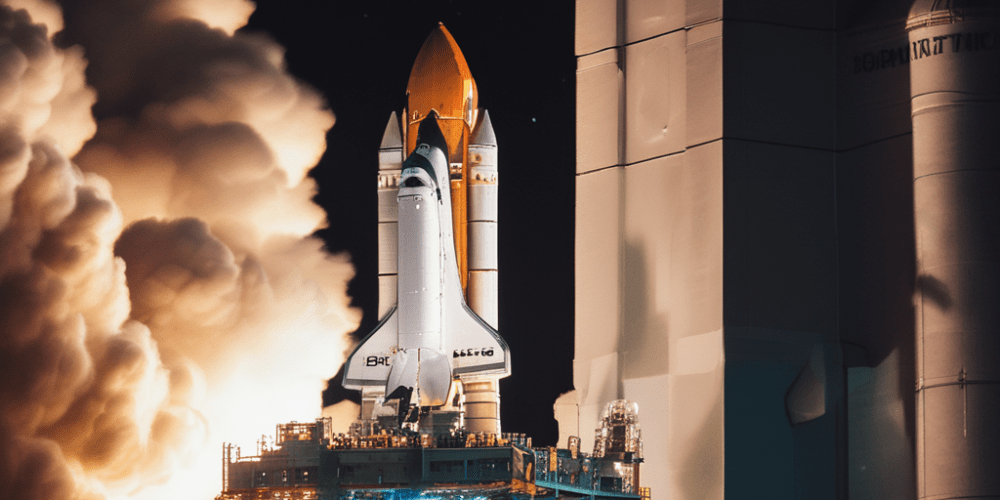
Space Shuttle Atlantis: Unveiling the Legacy of Human Space Exploration

In the vast panorama of human exploration, few vehicles have captured the imagination and pushed the boundaries of our understanding like the Space Shuttle Atlantis. Part of NASA’s storied Space Shuttle program, Atlantis holds a special place in the hearts of space enthusiasts and historians alike. Let’s take a journey through its illustrious history and explore the impact it had on space exploration.

Atlantis was named after RV Atlantis, a two-masted sailing ship that operated as a research vessel for the Woods Hole Oceanographic Institution from 1930 to 1966. The shuttle itself was delivered to NASA in 1985, making it the fourth operational shuttle in the fleet. Its maiden flight, STS-51-J, took place on October 3, 1985, and marked the beginning of a remarkable career in space exploration.

Throughout its operational life, Atlantis undertook a multitude of missions critical to the construction and servicing of the International Space Station (ISS), deploying satellites, conducting scientific experiments, and even performing important repair missions to the Hubble Space Telescope.

One of the most iconic moments in Atlantis’s history was its role in servicing the Hubble Space Telescope. The telescope, a pinnacle of astronomical observation, required periodic maintenance and upgrades to ensure its scientific capabilities remained at the cutting edge. Atlantis undertook several missions to the Hubble, including the final servicing mission in 2009 (STS-125), which extended the telescope’s operational life and significantly enhanced its scientific potential.

Atlantis

Atlantis played a pivotal role in the construction and resupply of the International Space Station (ISS), a collaborative effort involving multiple nations to establish a permanent human presence in space. Its missions included delivering crucial components like the Russian-built Zarya module and conducting assembly tasks that laid the foundation for the ISS’s expansive growth over the years.

Atlantis

Beyond its technical achievements, Atlantis became an iconic symbol of human ingenuity and determination. Its missions captured the public’s imagination and inspired generations to pursue careers in science, technology, engineering, and mathematics (STEM). The shuttle’s ability to ferry astronauts and cargo to space, coupled with its capability to return safely to Earth, marked a new era in space travel.

Atlantis

Atlantis also played a significant role in bridging the gap between the end of the Apollo program and the dawn of new space exploration initiatives. It served as a workhorse for NASA, embodying the agency’s commitment to pushing the boundaries of human knowledge and exploration.

After 33 successful missions spanning over 25 years, Atlantis flew its final mission (STS-135) on July 8, 2011, marking the end of the Space Shuttle program. This poignant moment signified the conclusion of an era in space exploration but paved the way for new endeavors, including NASA’s focus on deep space exploration and partnerships with private companies like SpaceX and Boeing.

Today, Atlantis stands as a testament to human achievement in space exploration. It is displayed with pride at the Kennedy Space Center Visitor Complex in Florida, where visitors can marvel at its sheer size and the technological prowess it represents. Its legacy lives on in the memories of those who witnessed its missions and in the continued pursuit of scientific discovery and exploration beyond Earth’s bounds.

The Space Shuttle Atlantis remains a symbol of human innovation, resilience, and the relentless pursuit of knowledge. Its missions, from launching satellites to servicing the Hubble Space Telescope and assembling the ISS, have left an indelible mark on space exploration history. As we look to the future of space travel, we can draw inspiration from Atlantis’s legacy—a legacy of pushing boundaries, overcoming challenges, and daring to reach for the stars.

In the grand tapestry of our journey beyond Earth, Atlantis shines brightly—a beacon of our collective aspiration to explore, discover, and understand the cosmos.