astronomy

C/2025 A6 (Lemmon): A Once-in-a-Lifetime Comet View

The comet known as C/2025 A6 (Lemmon) is quickly becoming a standout celestial visitor in 2025. Discovered on January 3 2025 by the Mount Lemmon Survey in Arizona, it was initially spotted at a very faint magnitude of about +21.5 when it was some 4.5 AU from the Sun. Astronomy+2Wikipedia+2
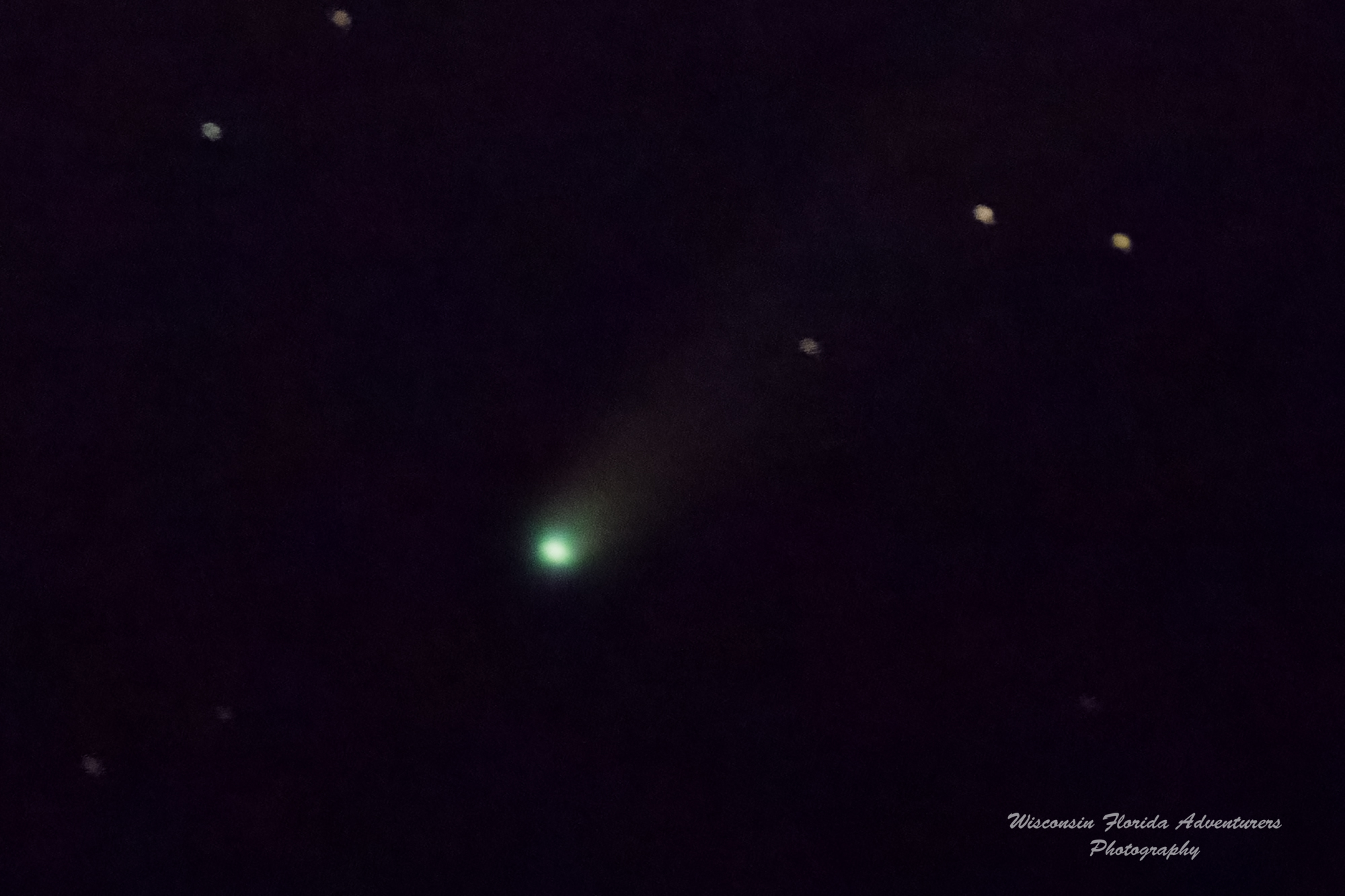
A rare appearance

The comet is classified as a long-period or non-periodic comet: its inbound orbital period is estimated at around ~1,350 years, and after its upcoming perihelion passage the period will shorten to about ~1,150 years. Wikipedia+1 This means that for virtually everyone alive today, this will be a once-in-a-lifetime opportunity to observe it.

Brightening and visibility

After its discovery, the comet has brightened dramatically, from magnitude ~21 to now an observed ~5 or brighter, depending on sky conditions. WIRED+1 Its closest approach to Earth occurs on October 21 2025, at a distance of about 0.596 AU (≈ 89 million km) from Earth. TheSkyLive Then it will reach perihelion (its closest point to the Sun) around November 8 2025, at about 0.53 AU. Wikipedia

Because of these factors, skywatchers are expecting it to possibly reach naked-eye visibility under dark skies (magnitudes of ~3.5 to ~4.4) late October into early November. IFLScience

What makes it special

The comet’s tail has already shown interesting behaviour: astrophotographers report a dust tail several degrees long and variations in the ion tail as solar wind interacts with the comet’s out-gassing. Wikipedia+1 Also, its bright greenish coma is caused by diatomic carbon (C₂) emissions when sunlight breaks up the gas in the coma — the same mechanism that gives some other comets their green glow. Live Science+1

How and when to see it

For observers in the Northern Hemisphere:

  • Look in the evening sky, low in the west after sunset, especially around late October. Star Walk+1
  • Use binoculars or a small telescope for the best chance; naked-eye viewing is possible only under dark, clear skies away from light pollution. Star Walk
  • Because the Moon is a new moon near the comet’s closest approach, the skies will be darker than usual — a bonus for comet hunting. Astronomy

Why catch it now

Since its return to the inner Solar System won’t happen for over a thousand years, this observation window is extremely limited. The comet will fade quickly after early November as it moves farther out, and its visibility will diminish. Star Walk


In short: C/2025 A6 (Lemmon) offers a rare and exciting chance to witness a bright, greenish comet with a prominent tail, visible in the coming weeks under good conditions. If you have access to a dark sky area and the right timing, it’s well worth the effort to look up.

Comet C/2023 A3: A Celestial Wonder

Comet C/2023 A3, officially named Comet Tsuchinshan–ATLAS, is a recently discovered celestial object that has sparked interest among astronomers and space enthusiasts alike. Identified in early 2023, this comet bears a dual designation reflecting the institutions responsible for its discovery: the Tsuchinshan Observatory in China and the Asteroid Terrestrial-impact Last Alert System (ATLAS) based in Hawaii. The discovery of this comet comes as a unique opportunity for astronomers to study a potentially bright and observable cometary object as it approaches the Sun, promising significant scientific and public attention if it brightens as anticipated in 2024.

The initial discovery of C/2023 A3 took place on January 9, 2023, when astronomers at the Tsuchinshan Observatory observed a faint object moving against the background stars. After its discovery, the comet’s orbit was calculated with the help of additional observations, including those from ATLAS, which helped verify its path and characteristics. Observations indicated that this comet follows a long-period orbit, meaning it originates from the distant Oort Cloud, a vast region of icy bodies that surrounds our Solar System. With an orbital period estimated to be in the millions of years, Comet C/2023 A3 may be approaching the inner Solar System for the first time, bringing with it pristine material from the early Solar System.

The comet’s closest approach to the Sun (perihelion) was on October 13, 2024, and to Earth on October 16, 2024. These dates are especially important for astronomers, as perihelion and close approach can result in the brightest and most active phases for a comet. The Comet C/2023 A3 became as bright as some of the more notable comets of recent years, it reached a magnitude bright enough to be visible to the naked eye. Observers in the Northern Hemisphere were able to witness an impressive spectacle during the fall of 2024, with the comet visible in the evening sky.

The brightening of C/2023 A3 as it neared the Sun was driven by the process of sublimation, where the ice within the comet’s nucleus turns directly into gas upon heating. This process releases gas and dust that formed the comet’s coma (a cloud-like atmosphere) and distinctive tail. As the comet approached the inner Solar System, sunlight and solar winds interacted with these materials, creating the iconic tails that we associate with comets. For C/2023 A3, this process revealed insights about its composition and structure, as observing its outgassing helped scientists understand the ratio of water ice to other ices, as well as the presence of organic molecules and dust.

Studying comets like C/2023 A3 is significant because they offer a glimpse into the Solar System’s early history. As primordial remnants from the time of planetary formation, comets contain pristine materials that have been largely unchanged for billions of years. They are, in essence, time capsules that hold clues about the conditions and processes that existed when the Sun and planets were forming. By analyzing the material released by C/2023 A3, scientists hope to learn more about the composition of the early Solar System, as well as gain insights into how planets and other bodies may have formed.

Comet C/2023 A3 (Tsuchinshan–ATLAS) presents a valuable opportunity for both scientists and amateur astronomers to observe and study a long-period comet. Its brightness and visibility has made it a memorable sight in 2024, offering both a celestial spectacle and a deeper understanding of our cosmic neighborhood.