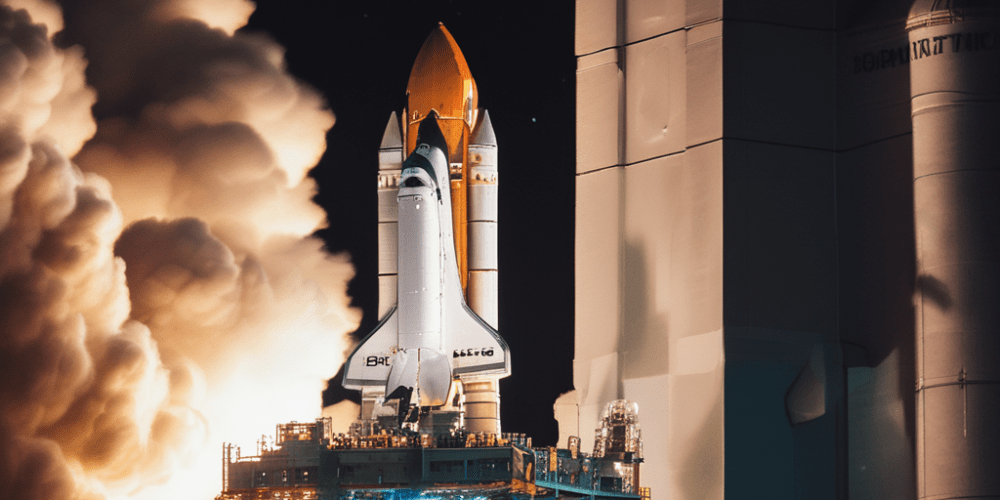
In the vast panorama of human exploration, few vehicles have captured the imagination and pushed the boundaries of our understanding like the Space Shuttle Atlantis. Part of NASA’s storied Space Shuttle program, Atlantis holds a special place in the hearts of space enthusiasts and historians alike. Let’s take a journey through its illustrious history and explore the impact it had on space exploration.


Atlantis was named after RV Atlantis, a two-masted sailing ship that operated as a research vessel for the Woods Hole Oceanographic Institution from 1930 to 1966. The shuttle itself was delivered to NASA in 1985, making it the fourth operational shuttle in the fleet. Its maiden flight, STS-51-J, took place on October 3, 1985, and marked the beginning of a remarkable career in space exploration.
Throughout its operational life, Atlantis undertook a multitude of missions critical to the construction and servicing of the International Space Station (ISS), deploying satellites, conducting scientific experiments, and even performing important repair missions to the Hubble Space Telescope.
One of the most iconic moments in Atlantis’s history was its role in servicing the Hubble Space Telescope. The telescope, a pinnacle of astronomical observation, required periodic maintenance and upgrades to ensure its scientific capabilities remained at the cutting edge. Atlantis undertook several missions to the Hubble, including the final servicing mission in 2009 (STS-125), which extended the telescope’s operational life and significantly enhanced its scientific potential.

Atlantis played a pivotal role in the construction and resupply of the International Space Station (ISS), a collaborative effort involving multiple nations to establish a permanent human presence in space. Its missions included delivering crucial components like the Russian-built Zarya module and conducting assembly tasks that laid the foundation for the ISS’s expansive growth over the years.

Beyond its technical achievements, Atlantis became an iconic symbol of human ingenuity and determination. Its missions captured the public’s imagination and inspired generations to pursue careers in science, technology, engineering, and mathematics (STEM). The shuttle’s ability to ferry astronauts and cargo to space, coupled with its capability to return safely to Earth, marked a new era in space travel.

Atlantis also played a significant role in bridging the gap between the end of the Apollo program and the dawn of new space exploration initiatives. It served as a workhorse for NASA, embodying the agency’s commitment to pushing the boundaries of human knowledge and exploration.
After 33 successful missions spanning over 25 years, Atlantis flew its final mission (STS-135) on July 8, 2011, marking the end of the Space Shuttle program. This poignant moment signified the conclusion of an era in space exploration but paved the way for new endeavors, including NASA’s focus on deep space exploration and partnerships with private companies like SpaceX and Boeing.

Today, Atlantis stands as a testament to human achievement in space exploration. It is displayed with pride at the Kennedy Space Center Visitor Complex in Florida, where visitors can marvel at its sheer size and the technological prowess it represents. Its legacy lives on in the memories of those who witnessed its missions and in the continued pursuit of scientific discovery and exploration beyond Earth’s bounds.
The Space Shuttle Atlantis remains a symbol of human innovation, resilience, and the relentless pursuit of knowledge. Its missions, from launching satellites to servicing the Hubble Space Telescope and assembling the ISS, have left an indelible mark on space exploration history. As we look to the future of space travel, we can draw inspiration from Atlantis’s legacy—a legacy of pushing boundaries, overcoming challenges, and daring to reach for the stars.
In the grand tapestry of our journey beyond Earth, Atlantis shines brightly—a beacon of our collective aspiration to explore, discover, and understand the cosmos.
 Wisconsin Florida Adventurers